Five projects approach the planet as a living system with its own intelligence, one that breathes, shifts, and records time. In these works, art functions as a responsive instrument for interpreting environmental signals, from sea-level rise and atmospheric movement to seismic activity and ecological change. Rather than treating climate crisis as purely visual or symbolic, the selection considers how environmental data and natural systems can be translated into sensory and spatial experience. Across the projects, the ocean appears as an archive of deep time, air becomes a connective medium, and geological activity is understood as a form of communication between human and non-human systems. Together, the works propose new ways of sensing and interpreting the environment through artistic practice.
“Nauru's first national pavilion positions the world's smallest island nation as a stark symbol of human impact on the natural landscape — shaped by colonial resource extraction and now threatened by rising sea levels. Moving beyond spectacle, the artists foreground the cultural knowledge and environmental connection at risk, framing a metaphysical dialogue on erasure.”
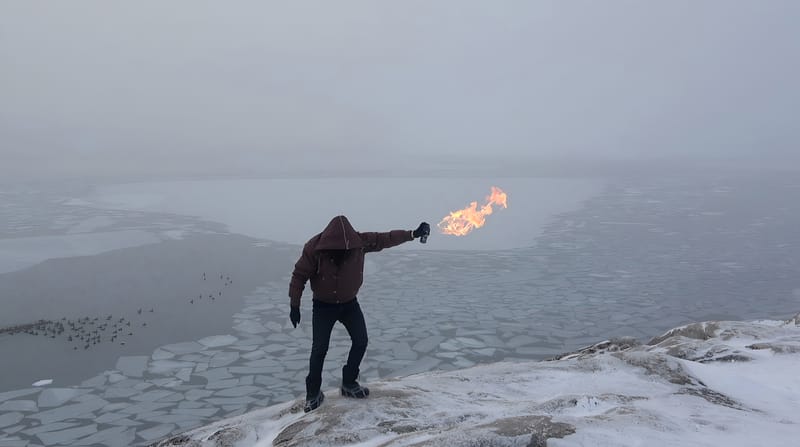
Nauru Pavilion · Nauru's first national pavilion approaches the world's smallest island country (21 km², ~12,500 people) as a symbol of human impact on the natural landscape — both a site manipulated by earth-altering colonial phosphate extraction and the first victim of rising sea levels, facing complete absorption into the Pacific. Beyond catastrophe imagery and spectacle, the artists centre the cultural knowledge and environmental connection that will be lost with the land, composing a metaphysical dialogue on erasure.
“The One Ocean Foundation curates a rotating cast of speakers and performance artists in the context of seven artists transposing the Ocean onto land, immersing viewers in the precarious ecosystems at the mercy of hapless human interaction.”
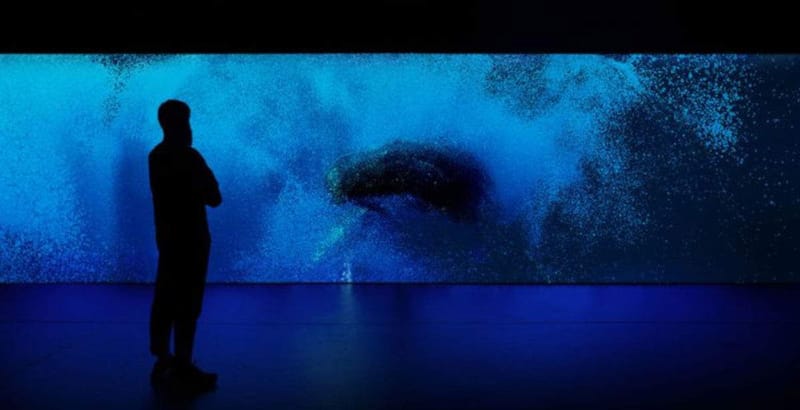
Fabbrica H3 · The One Ocean Foundation curates a rotating cast of speakers and performance artists alongside seven artists transposing the Ocean onto land, immersing viewers in precarious ecosystems at the mercy of human interaction. Programming includes cetacean-call recordings, plankton bioluminescence, and bioelectric signals from olive trees — staged at the deconsecrated Church of Santi Cosma e Damiano on Giudecca for one month only.
“A sea of approximately one hundred new paintings strung along the existing laundry lines of one of the last residential streets in Venice, made in collaboration with local residents and students. Marea is a meditation on climate change, overtourism, and the fragility of community life.”
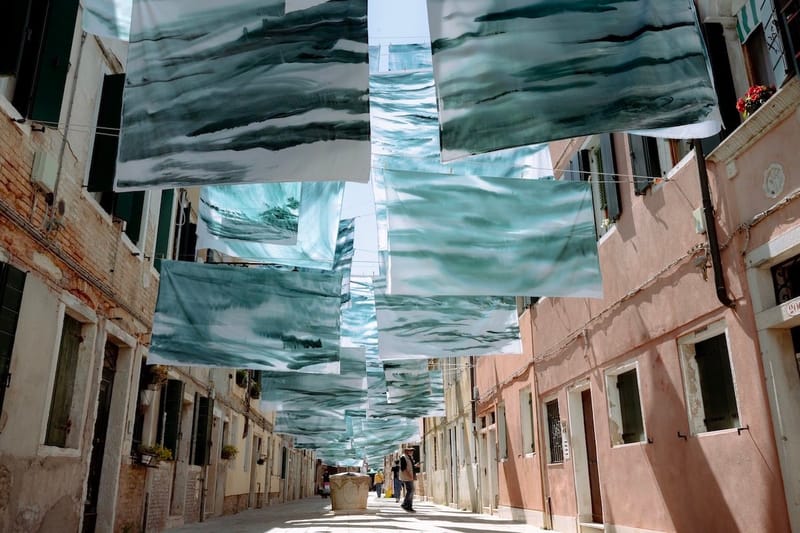
Corte Nuova · A sea of approximately one hundred new paintings strung along the existing laundry lines of one of the last residential streets in Venice — Castello's Corte Nuova — made by Melissa McGill in collaboration with local residents and students. 'Marea' is a meditation on climate change, overtourism, and the fragility of community life, endorsed by the Italian Delegation to UNESCO.
“Presented as a fictional research project tracing the cosmic breath that animates the world, featuring elements constructed from ventilation parts removed from the 200-year-old Hungarian Academy of Sciences, a 'breathing wall,' and a film documenting a year-long walk to find the most important sigh, with sound design by Máté Balogh.”
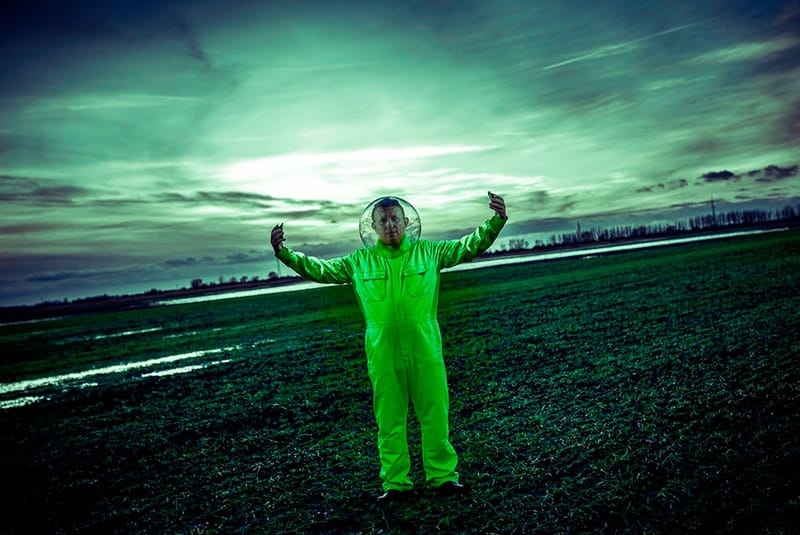
Hungary Pavilion · Endre Koronczi's Hungarian Pavilion is presented as a fictional research project tracing the cosmic breath that animates the world — featuring elements constructed from ventilation parts removed during the renovation of the Hungarian Academy of Sciences (founded 1825), a 'breathing wall,' and a film documenting a year-long walk to find the most important sigh, with sound design by Máté Balogh.
“Drawing on centuries of tradition reading animal behaviours as a warning system for impending earthquakes, the exhibition encases replicas of harbinger animals in a desktop computer environment, proffering a deviation from natural, animal instincts as a root cause of the contemporary collapse of trust in science.”
Portugal Pavilion · Drawing on centuries of tradition reading animal behaviours as a warning system for impending earthquakes, Alexandre Estrela's Portuguese Pavilion encases replicas of harbinger animals in a desktop computer environment — proffering humanity's deviation from natural, animal instincts as a root cause of the contemporary collapse of trust in science. The pavilion functions as a 'living seismic operating system,' with luminous 'Replicas' populating the cracks of aluminium plates.
