


Works
1964–2011, Réflexions sur une esthétique programmée · Manfred Mohr
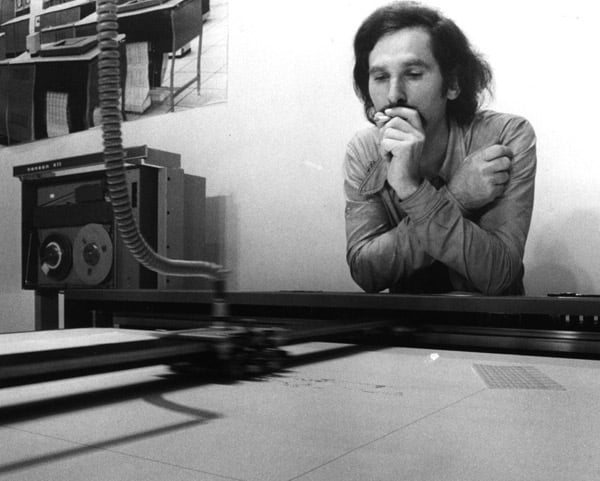
It was May 11, 1971 when the Musée d'Art Moderne de la Ville de Paris opened the influential exhibition Computer Graphics – Une Esthétique Programmée. A solo exhibition by Manfred Mohr, it featured the first display in a museum of works entirely calculated and drawn by a digital (rather than analog) computer. Revolutionary for its time, these drawings were more than mere curiosities – they signaled a new era of image creation, setting in motion a trajectory of modernism and information aesthetics. Using Manfred Mohr's work as a touchstone, 1964-2011, Réflexions sur une Esthétique Programmée reveals, through his art work, a critical period of development in media arts. It examines shifting perspectives in art and the working methods that made the visual conversation of information aesthetics possible. Discovering the theoretical writings of the German philosopher Max Bense in the early 1960's, Mohr was fascinated by the idea of a programmed aesthetic. He studied in Germany and in Paris at the Ecole de Beaux-Arts, and in 1968 he was a founding member of the seminar 'Art et Informatique' at the University of Vincennes. Influenced by the French composer Pierre Barbaud, Mohr started writing in FORTRAN to create concrete compositions executed as ink drawings on paper with a plotter in 1969. Mohr's work is an important bridge between handmade manipulations and machine-calculated structures in art. His rhythmic compositions are also influenced by his activities as a jazz musician. This exhibition was organized by Laura Blereau.
Works
1964–2011, Réflexions sur une esthétique programmée
bitforms gallery
1964–2011, Réflexions sur une esthétique programmée
Manfred Mohr